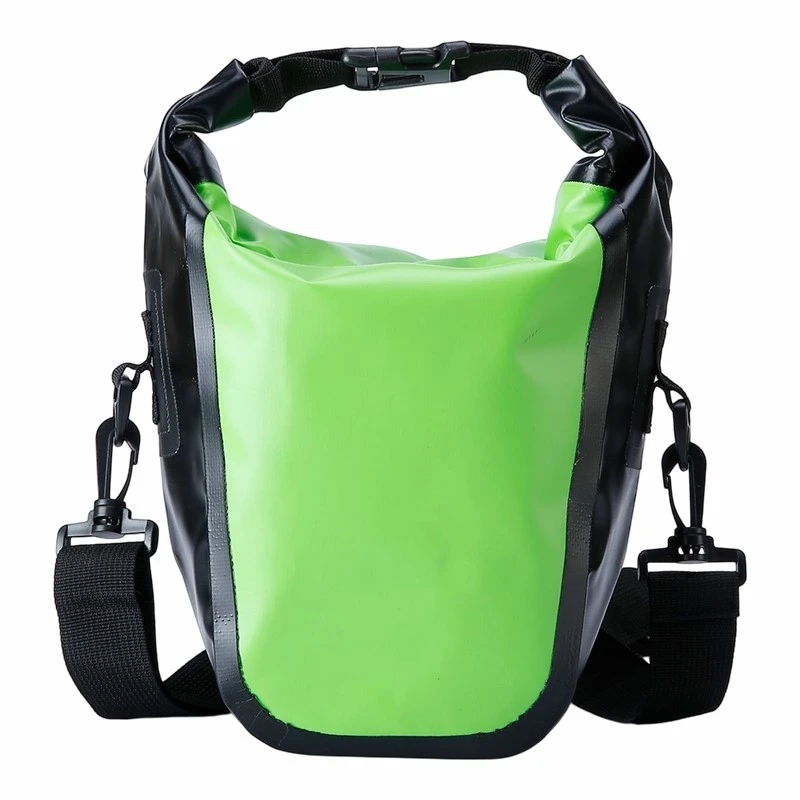
The specifications of a waterproof bag-including its dimensions, capacity, weight, material thickness, and waterproof rating-determine its suitability for various use cases. Based on capacity, these bags are generally categorized as small, medium, or large. Small-capacity bags (typically 2L to 10L) are compact and lightweight, designed for carrying personal essentials like a phone, wallet, keys, or identification; they are commonly used for swimming, fishing, and short outdoor excursions. Medium-capacity bags (10L to 30L) can accommodate clothing, towels, water bottles, food, and other daily necessities, making them well-suited for short trips, camping, cycling, and water sports. Large-capacity bags (30L to 60L or greater) offer ample interior space for a significant amount of clothing, outdoor gear, and supplies, catering to extended travel, mountaineering, camping, and professional outdoor activities. In terms of design, the dimensions-length, width, and height-are adjusted based on the bag's capacity and intended use. Factors such as strap length, the size of the opening, and the internal layout are also carefully considered to ensure the bag provides sufficient storage while remaining convenient to carry and use.
Material thickness, load-bearing capacity, and waterproof ratings are also critical aspects of a waterproof bag's design. Common materials include PVC, TPU, or nylon treated with a waterproof coating; the thickness of these materials is selected based on the intended application to balance waterproof performance, wear resistance, and overall weight. For instance, lightweight waterproof storage bags prioritize flexibility and portability, whereas large outdoor waterproof bags require high fabric strength, a durable, abrasion-resistant base, and robust load-bearing capacity at the attachment points for straps and other components. Regarding waterproof ratings, some products use the IP (Ingress Protection) standard to indicate their level of resistance against dust and moisture-though not all waterproof bags follow this specific classification. When purchasing, it is also important to examine the closure mechanism, the construction of the seams, and the specific testing conditions under which the product's performance was verified. Specifications may vary between brands and manufacturers; therefore, when purchasing or designing a waterproof bag, you should select the appropriate capacity, dimensions, materials, and level of water resistance based on your specific needs-ensuring that you do not focus solely on the bag's size while overlooking its overall quality and safety in use.